Information field theory for collective behavior
Proposed project for an Emmy Noether research group at the Center for Critical Computational Studies
Julian C. Schäfer-Zimmermann
Max Planck Institute of Animal Behavior
Department for the Ecology of Animal Societies
Communication and Collective Movement (CoCoMo) Group

Short biography
- My background:
- Moved to Berlin at age 18 without "Abitur", worked as graphic designer, and in the film industry to get it via second-chance education→ I learned to work towards a goal
- Studied physics at the TU Berlin, Bachelor's and Master's theses at the German Research Centre for Geosciences on computational methods in physical oceanography → I learned about numerical methods
- Scholarship from the German National Academic Foundation (Studienstiftung des deutschen Volkes)
- PhD at the Max-Born-Institute Berlin on artificial intelligence in ultrafast nonlinear quantum optics under Prof. Thomas Möller → I learned about frustration tolerance, deep learning, nanoparticles, and quantum many-body physics
- Worked part-time in the industry as machine-learning engineer
- First PostDoc at ETH Zürich on computer vision in the nanostructures and ultrafast x-ray science group of Prof. Daniela Rupp → I learned to supervise and to come up with my own projects
- I led a small team of researchers and student researchers and supervised four Master's theses (One jointly with IBM Zürich) and three semester projects
- Second PostDoc at the Max Planck Institute of Animal Behavior on large-scale deep learning and bioacoustics in the movement ecology group of Dr. Ariana Strandburg-Peshkin → I learned to write proposals, to build a network, and how amazing animal behavior is
- Organized and funded a small international workshop on bioacoustics, supervise two PhD students as part of the European Bioacoustic AI network (Horizon EU program)
- My vision for this project is to bring together all these experiences in a research group that focuses on gathering strength and insight from interdisciplinary approaches, with the aim of advancing the relatively new research field of 'Physics of Behaviour'*
C³S as host institute
- C³S is ideal because:
- Interdisciplinary research to understand shifts in behavior of a system is the very core of my project
- The research groups at C³S would provide a unique network relevant for my group and myself
- Frankfurt is ideal because:
- Complex & Dynamical Systems & Machine Learning Group of Prof. Claudius Gros at Goethe Uni
- Senckenberg Biodiversity and Climate Research Centre
- I am ideal for C³S because:
- I add the perspective of the emerging research field of Physics of Behavior to the study of critical systems
- I extend the C³S network to the Max Planck Institute of Animal Behavior and the Uni Konstanz, home of the Centre for the Advanced Study of Collective Behaviour, where I remain affiliated as a guest scientist and collaborator
Collective behavior, phase change, and criticality
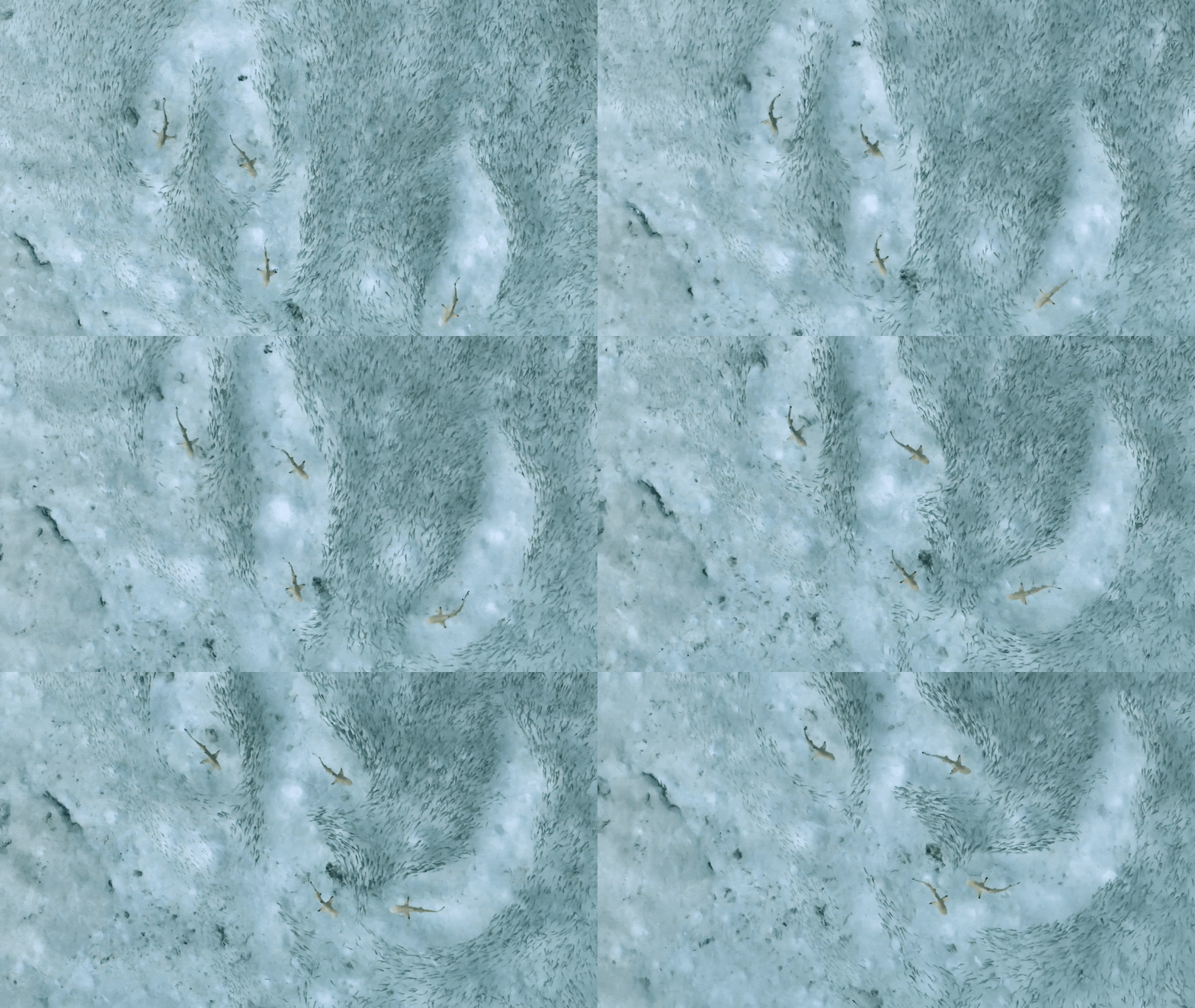
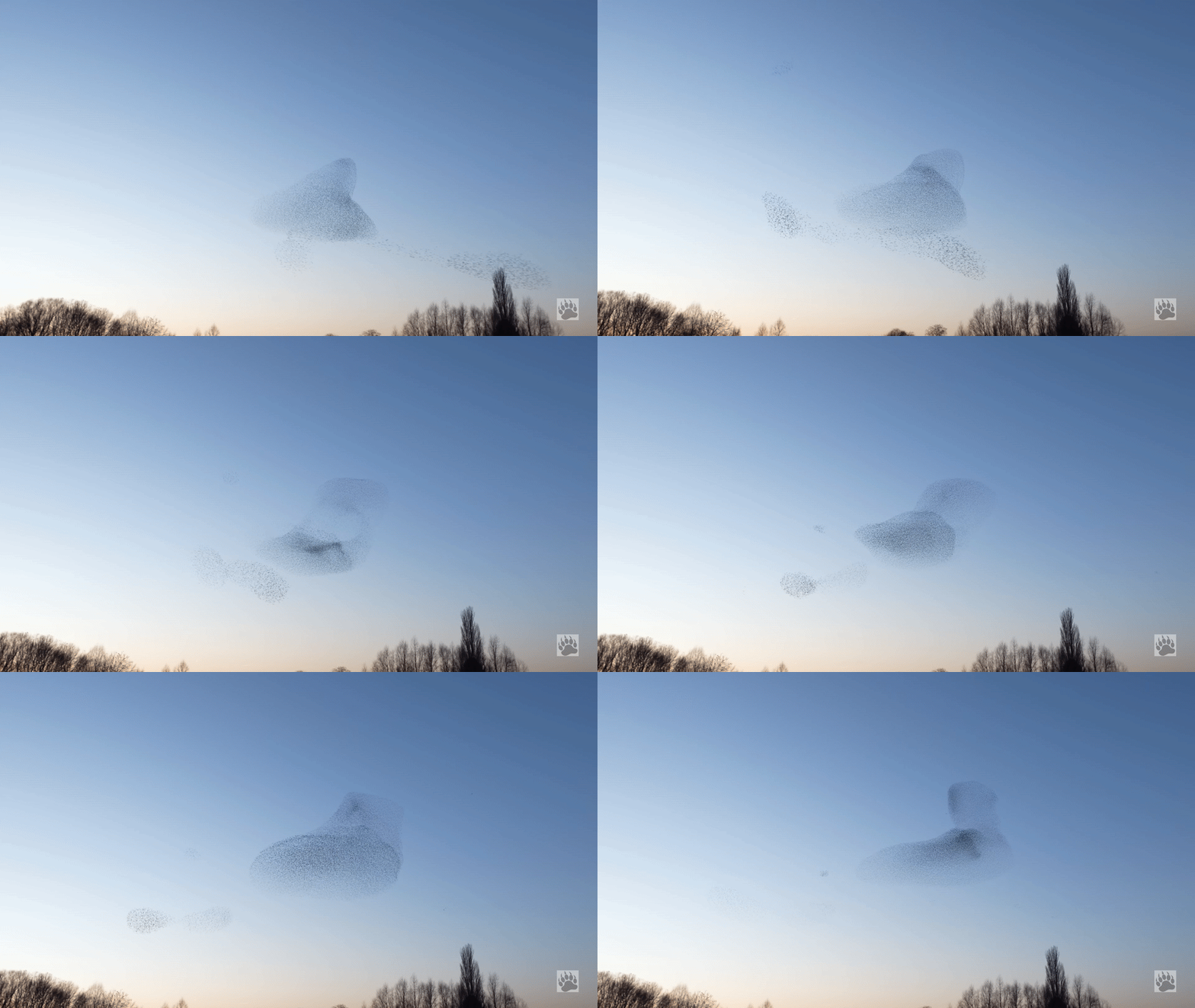
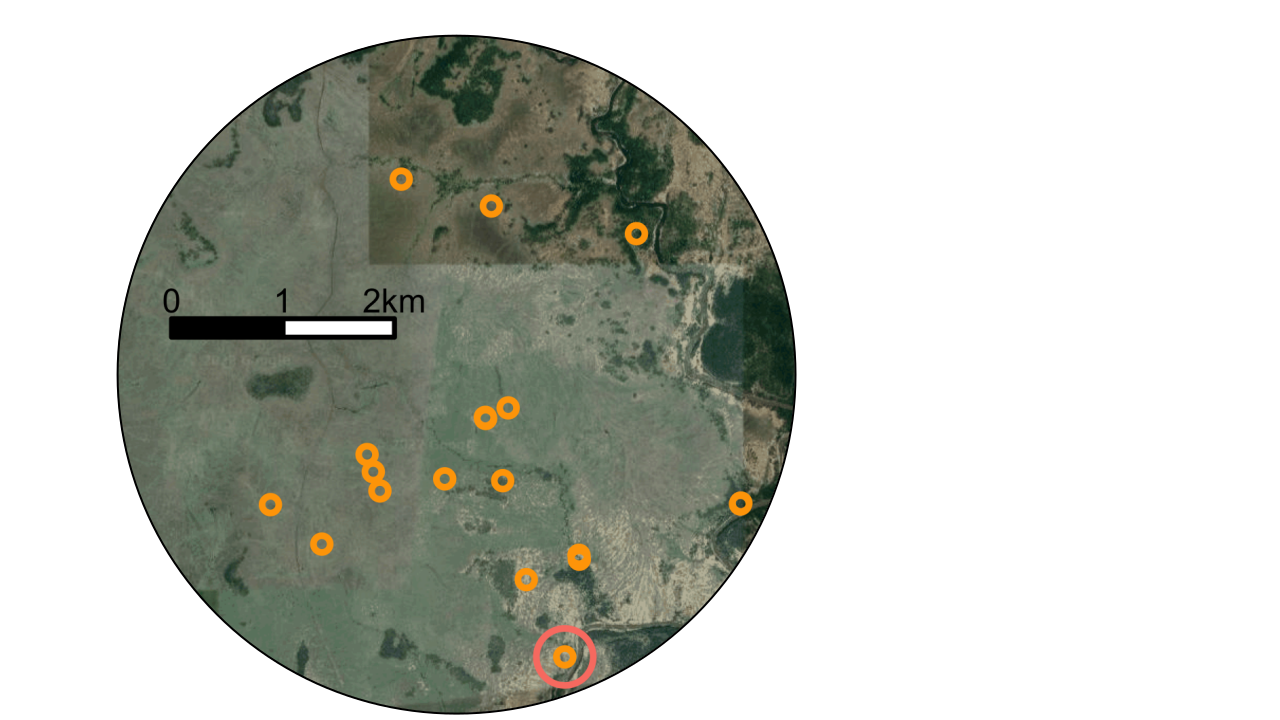
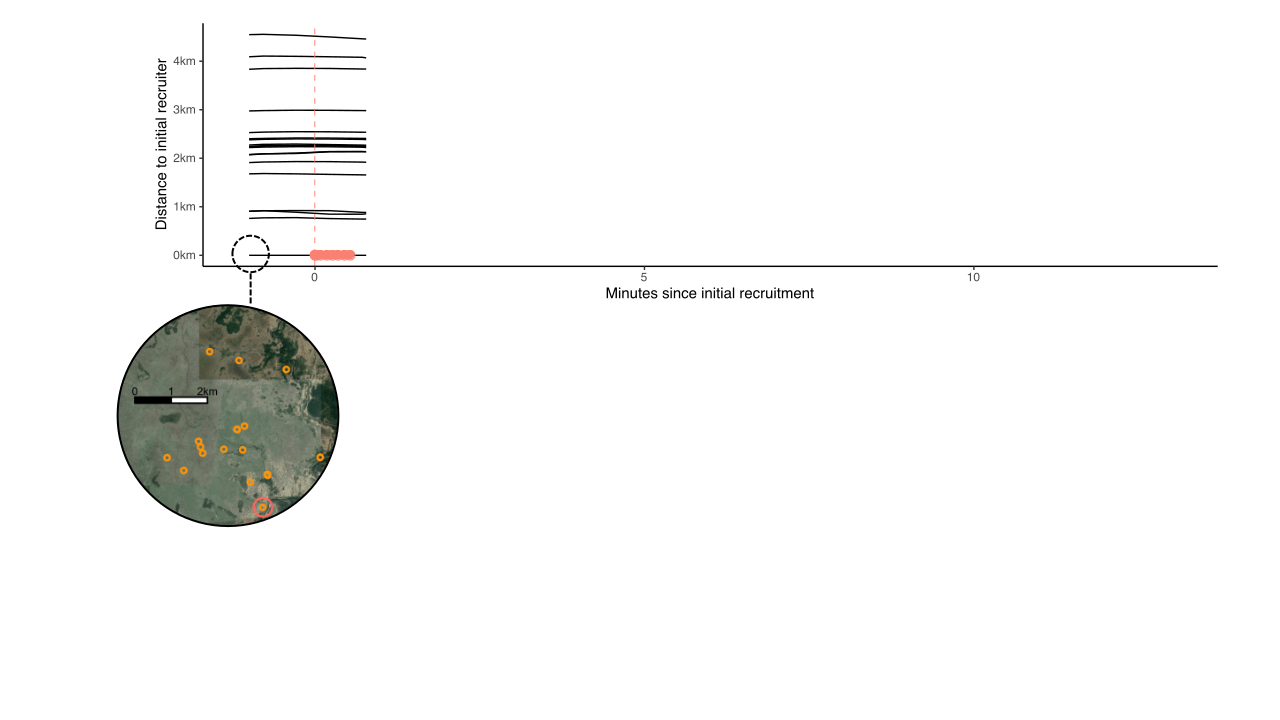
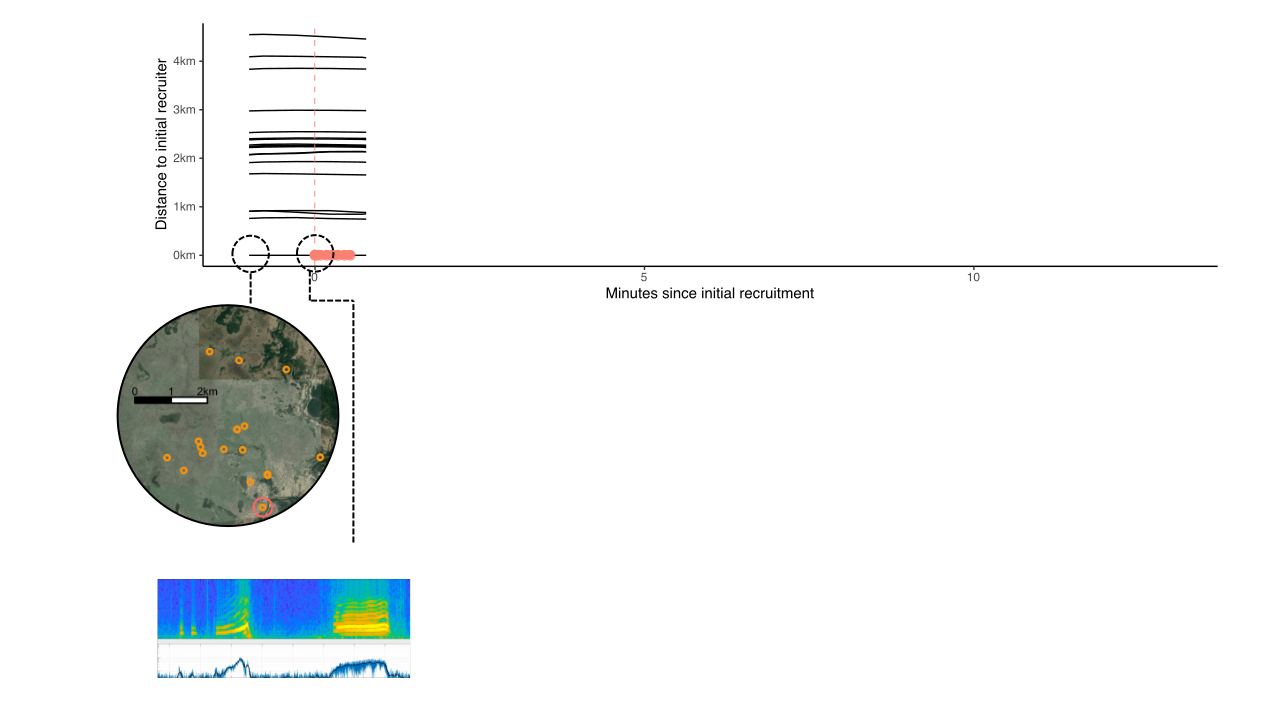
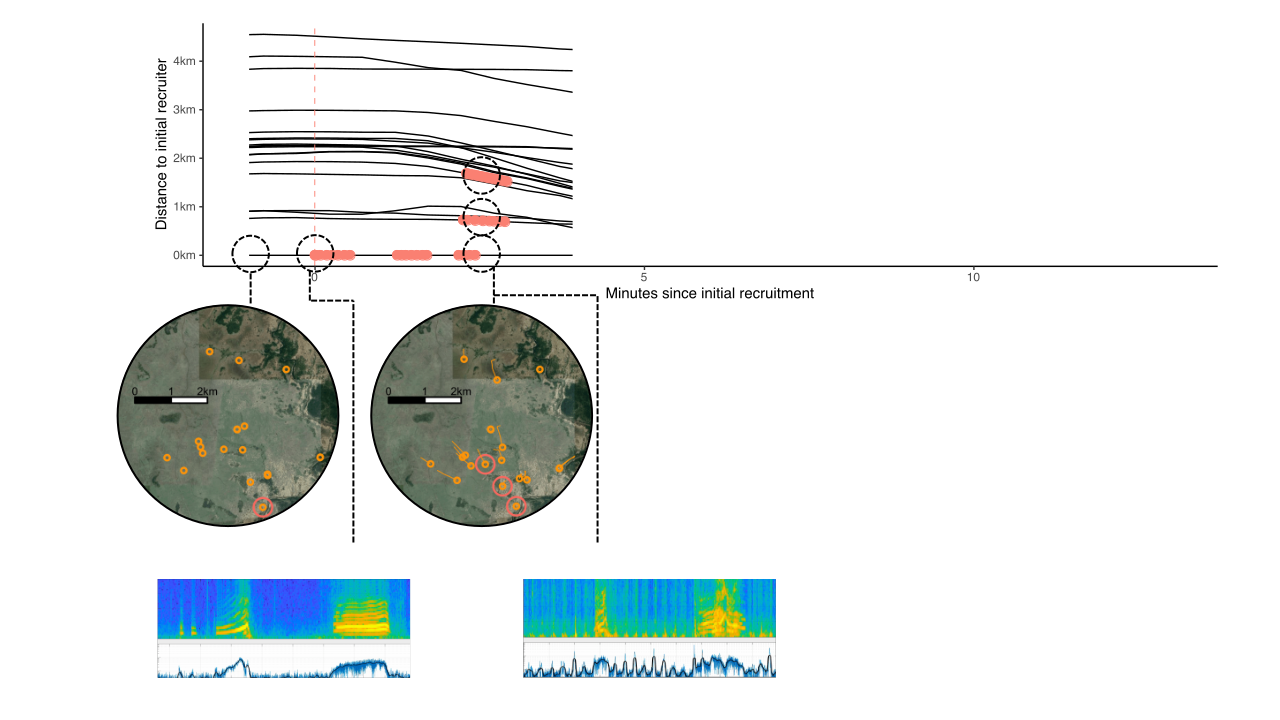
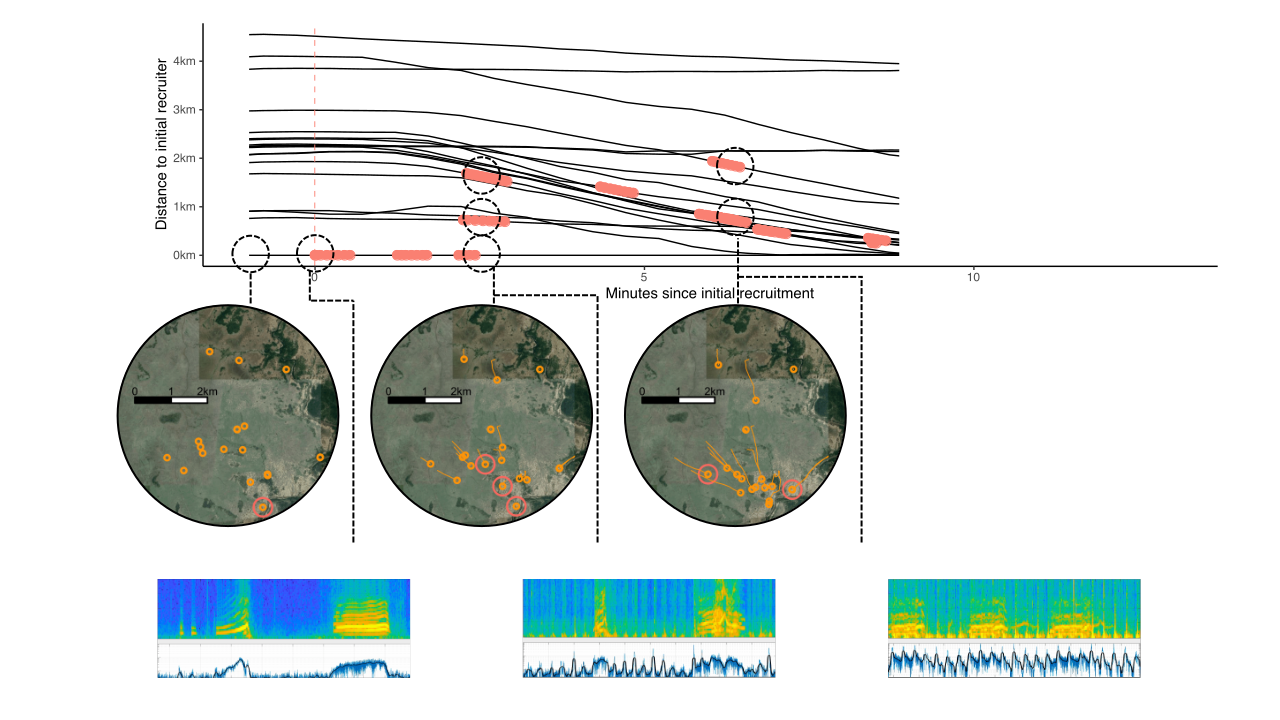
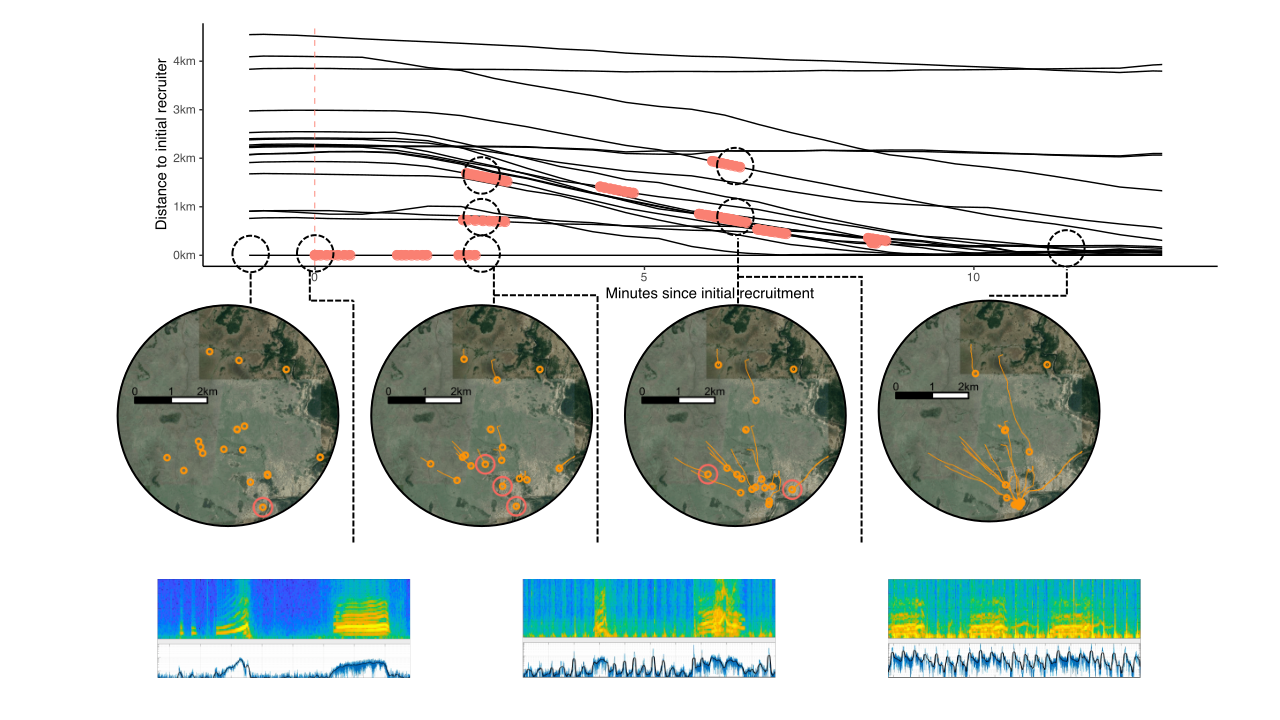
Collective evasion in fish schools
Murmuration in bird flocks
Recruitment events in spotted Hyenas
The Fundamental Challenge
How is information conveyed when complex patterns emerge from simple components?
Lagrangian
Tracks individuals (particles)- Vicsek-, Couzin-, Cucker-like models
- Behavioral heuristics -> no Hamiltonian
- No statistical mechanics
Eulerian
Treats group as fluid- Toner-Tu-, Mogilner-Edelstein-like models
- Continuous field equations
- No individuals
These models are only concerned with movement
From data to behavior
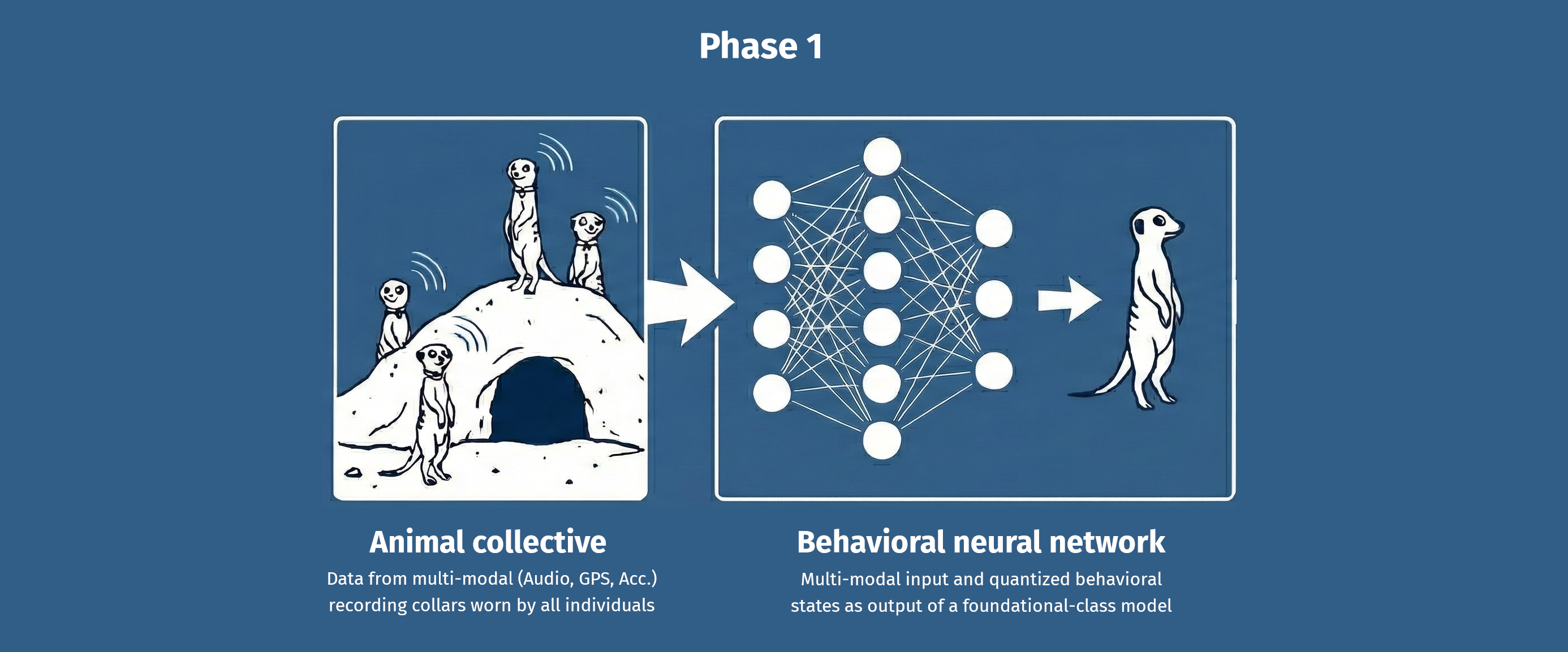
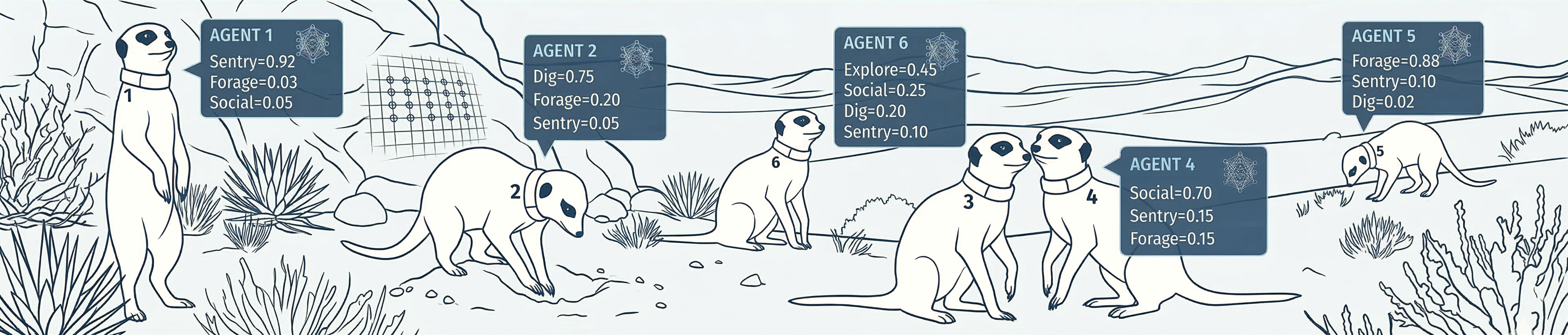
The animal collective
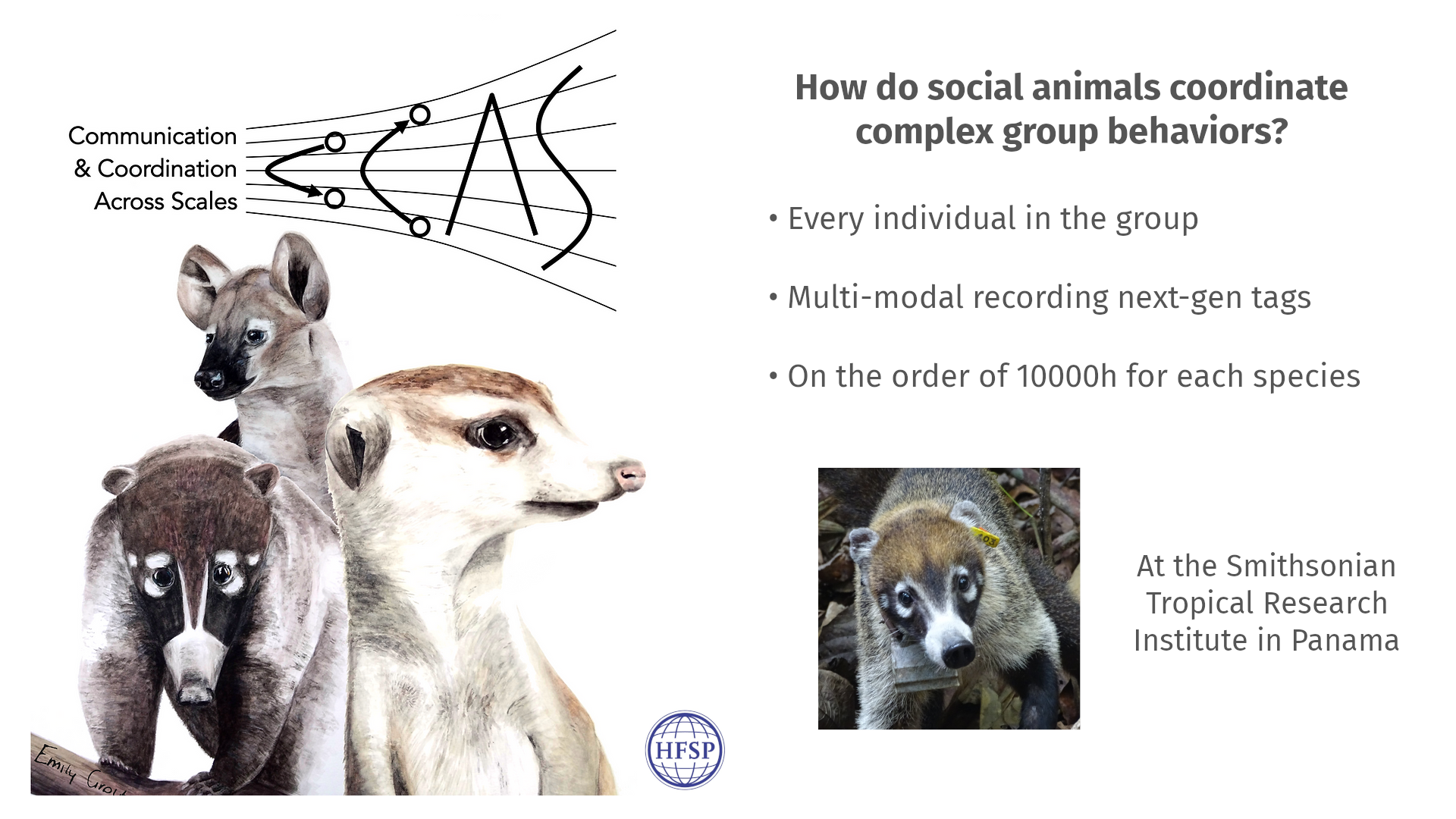
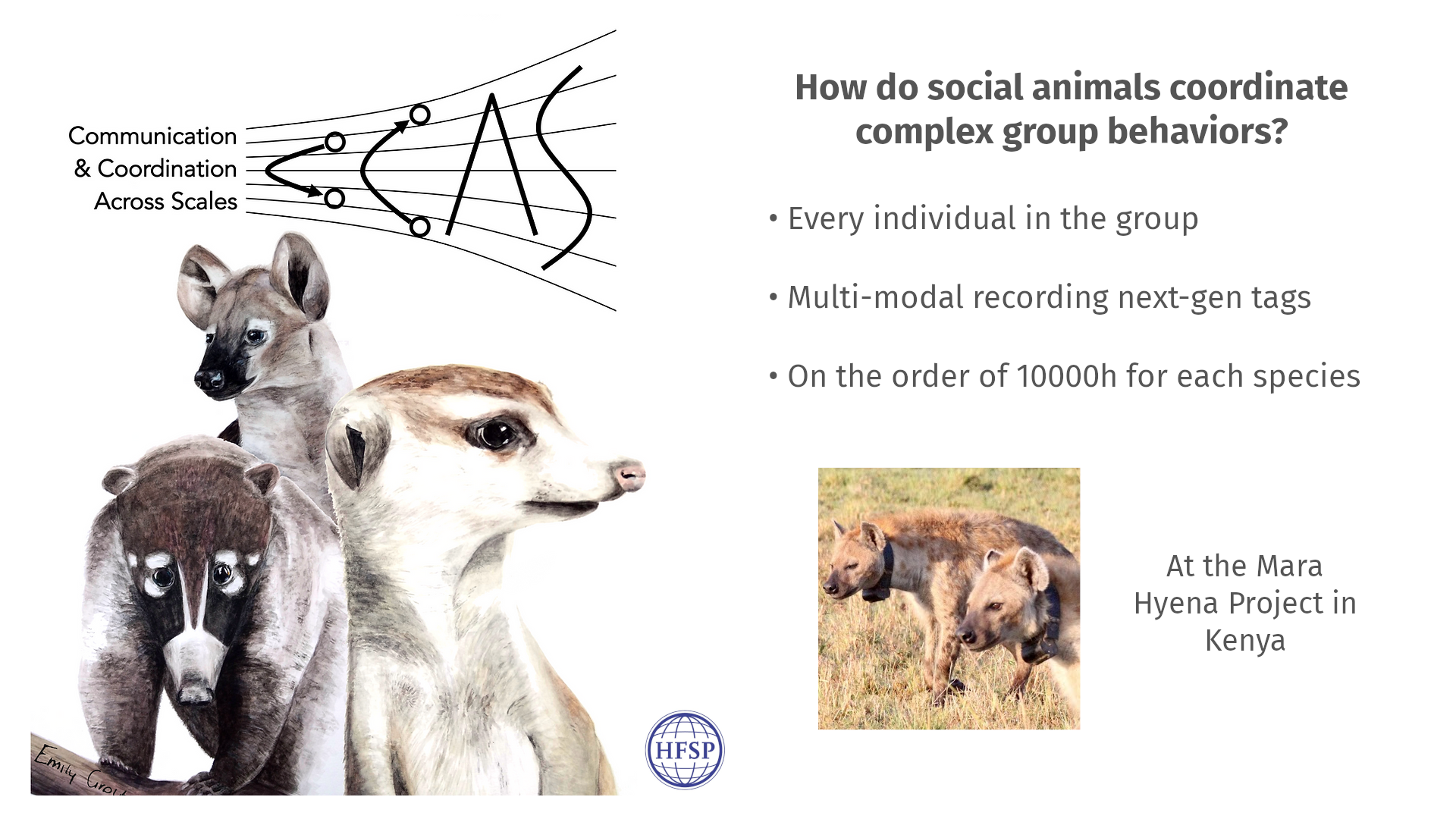
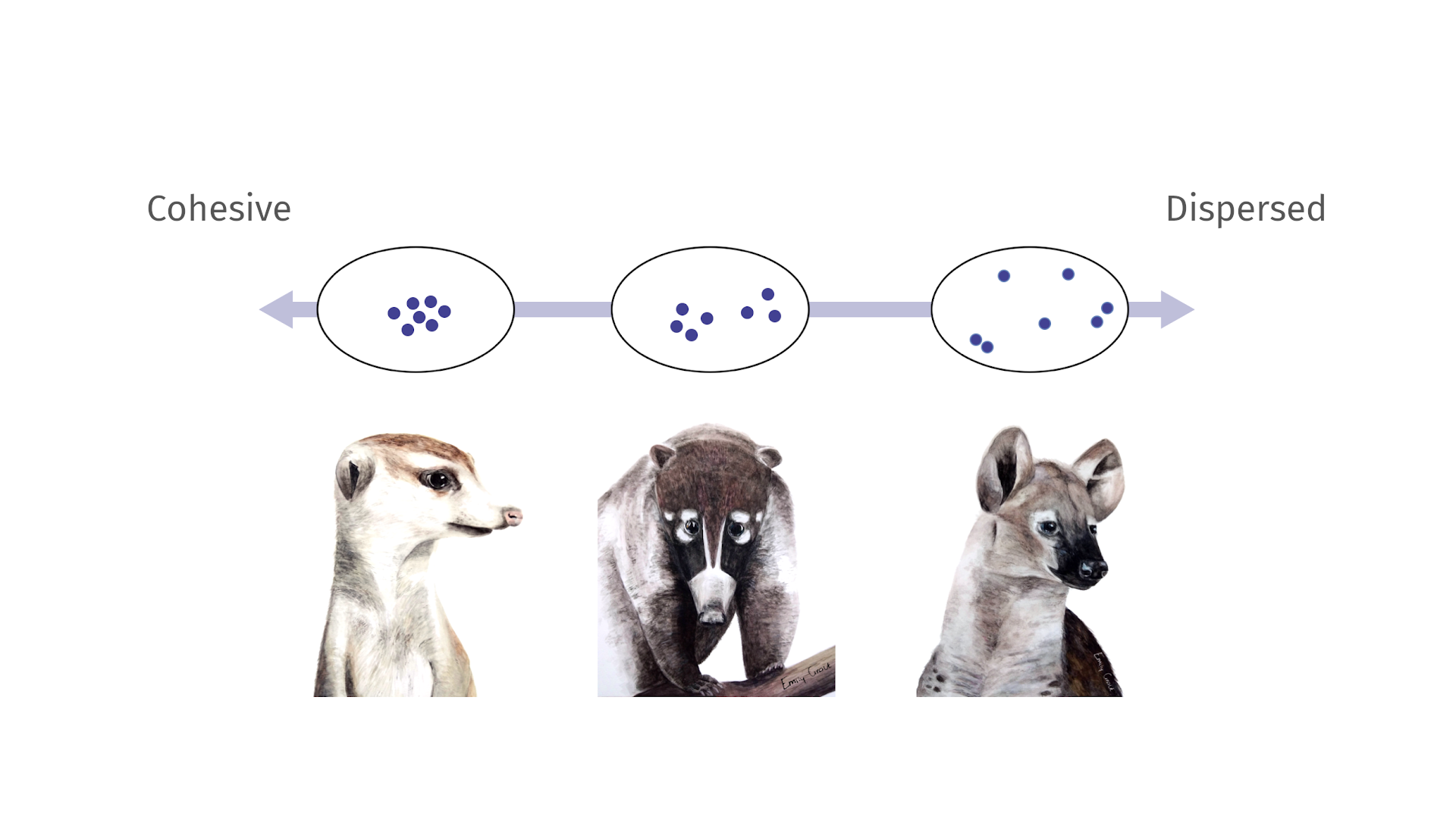
Phase 1:
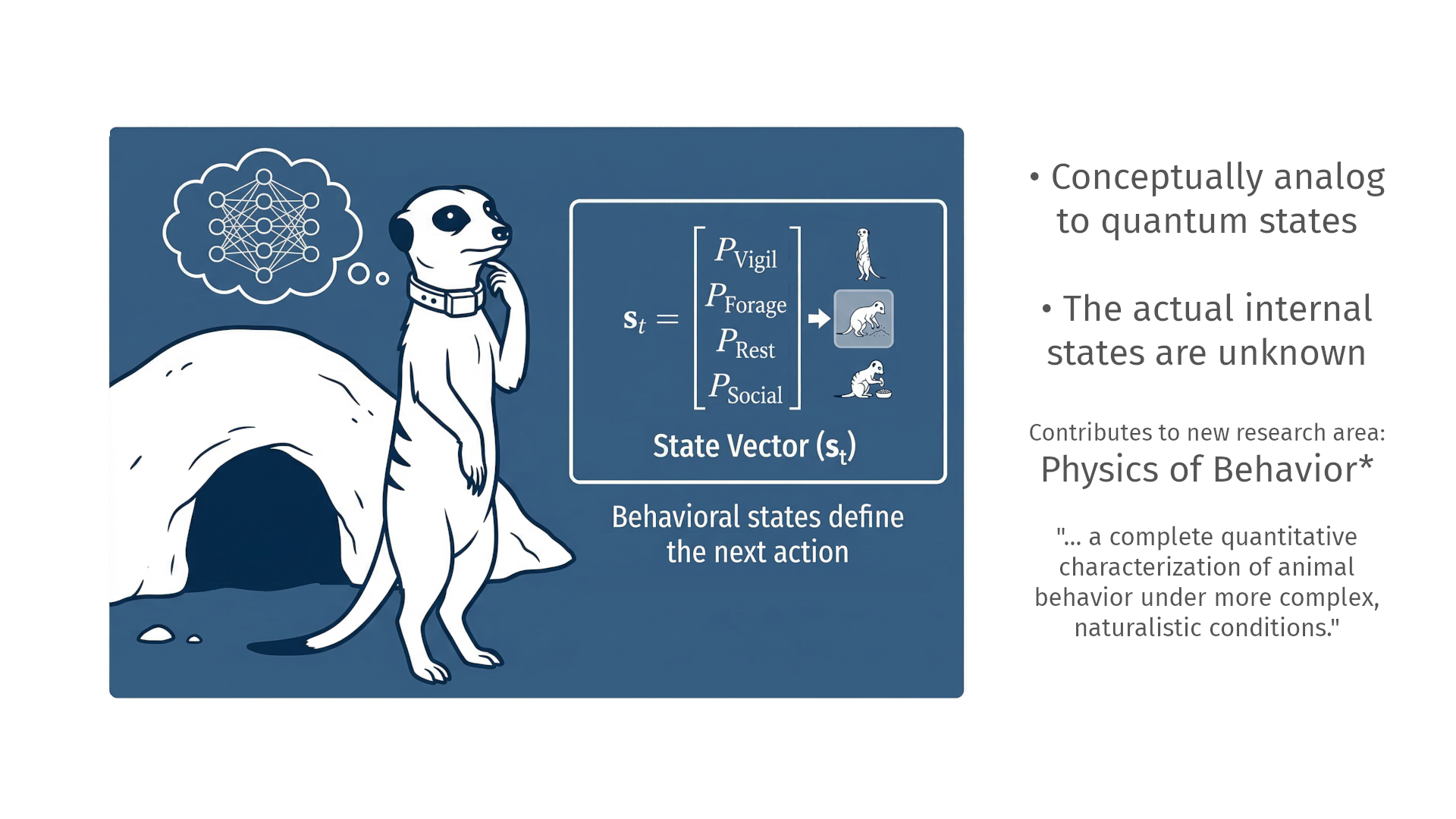
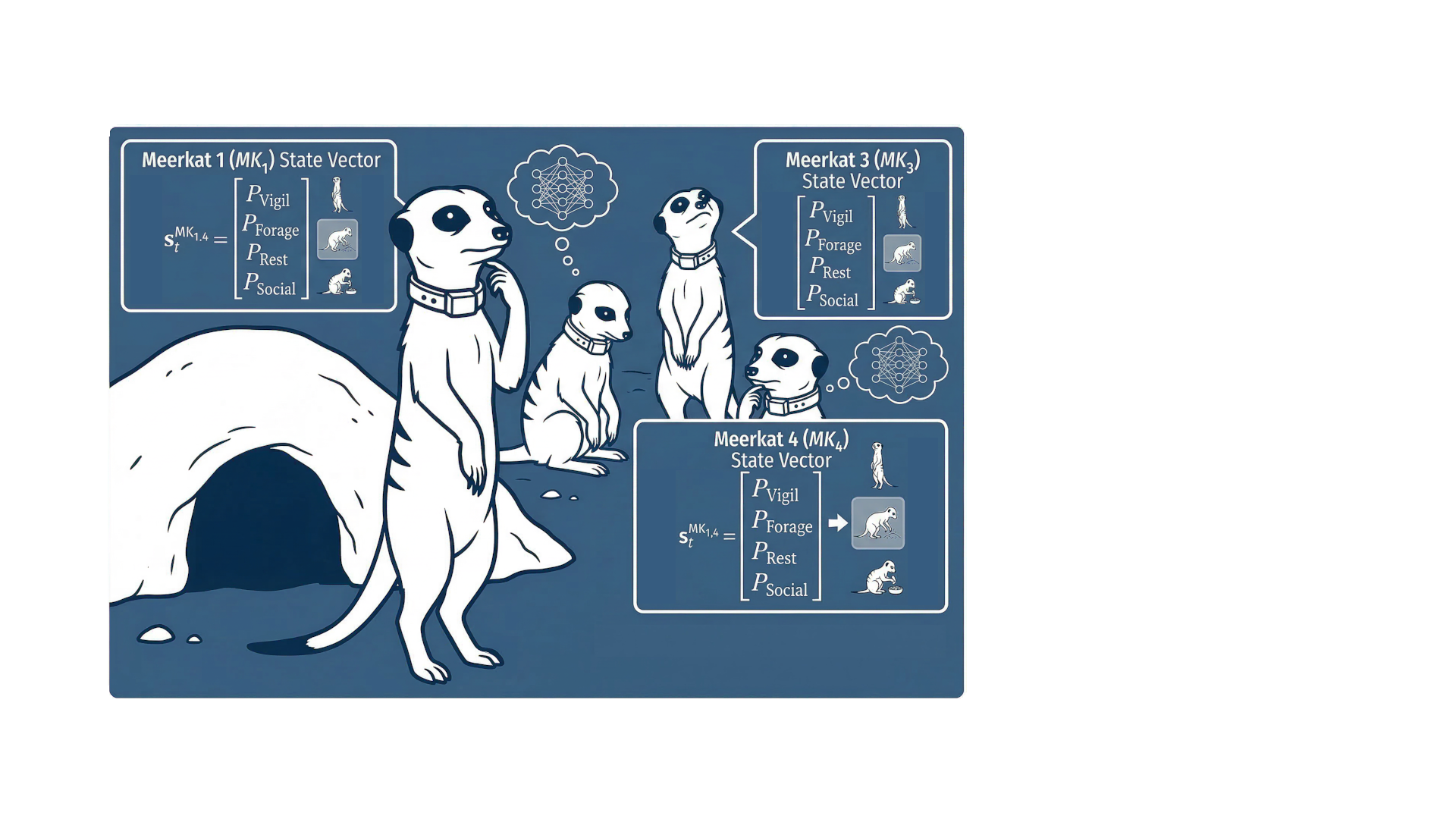
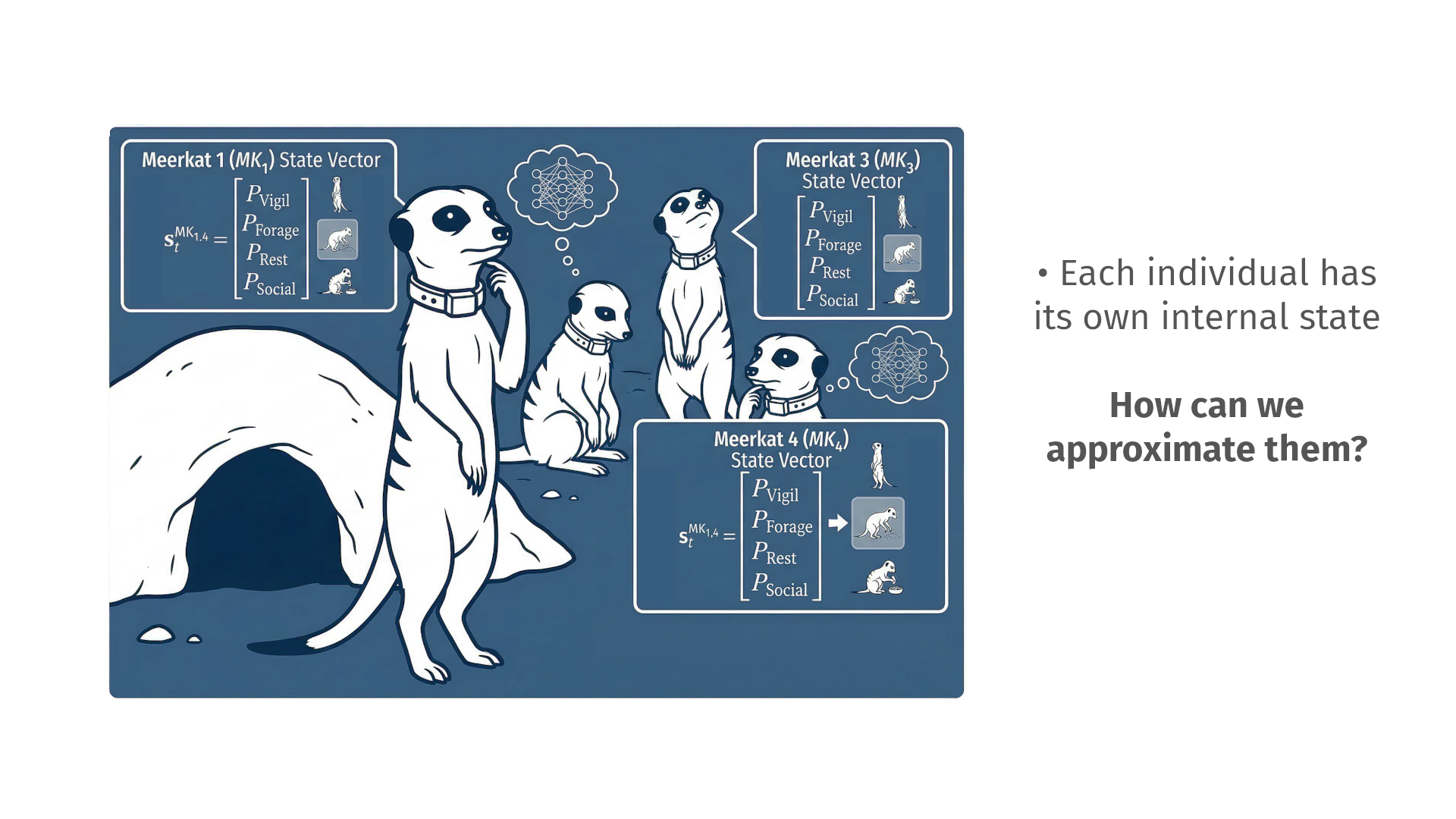
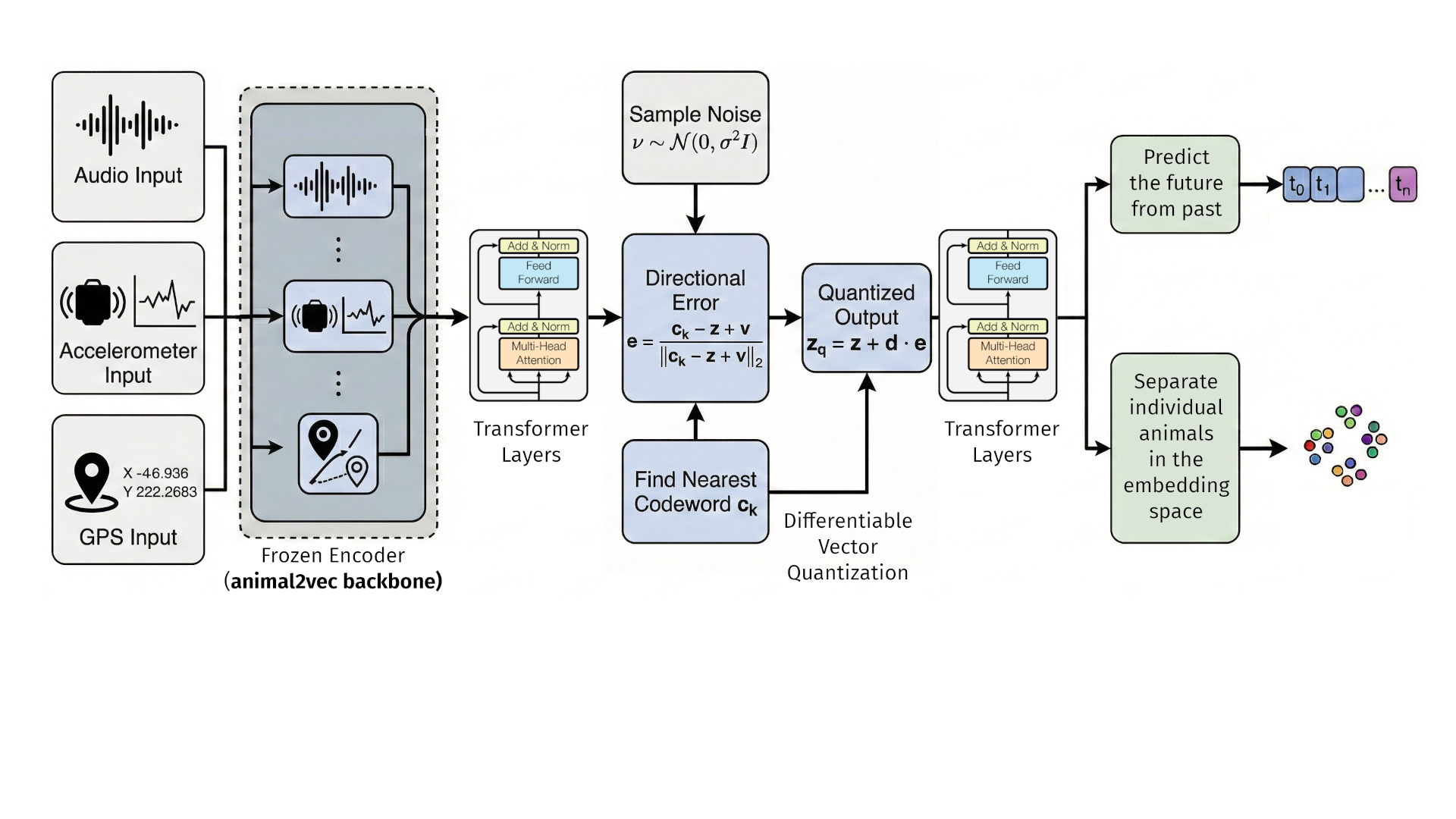
From the animal collective to the behavioral neural network
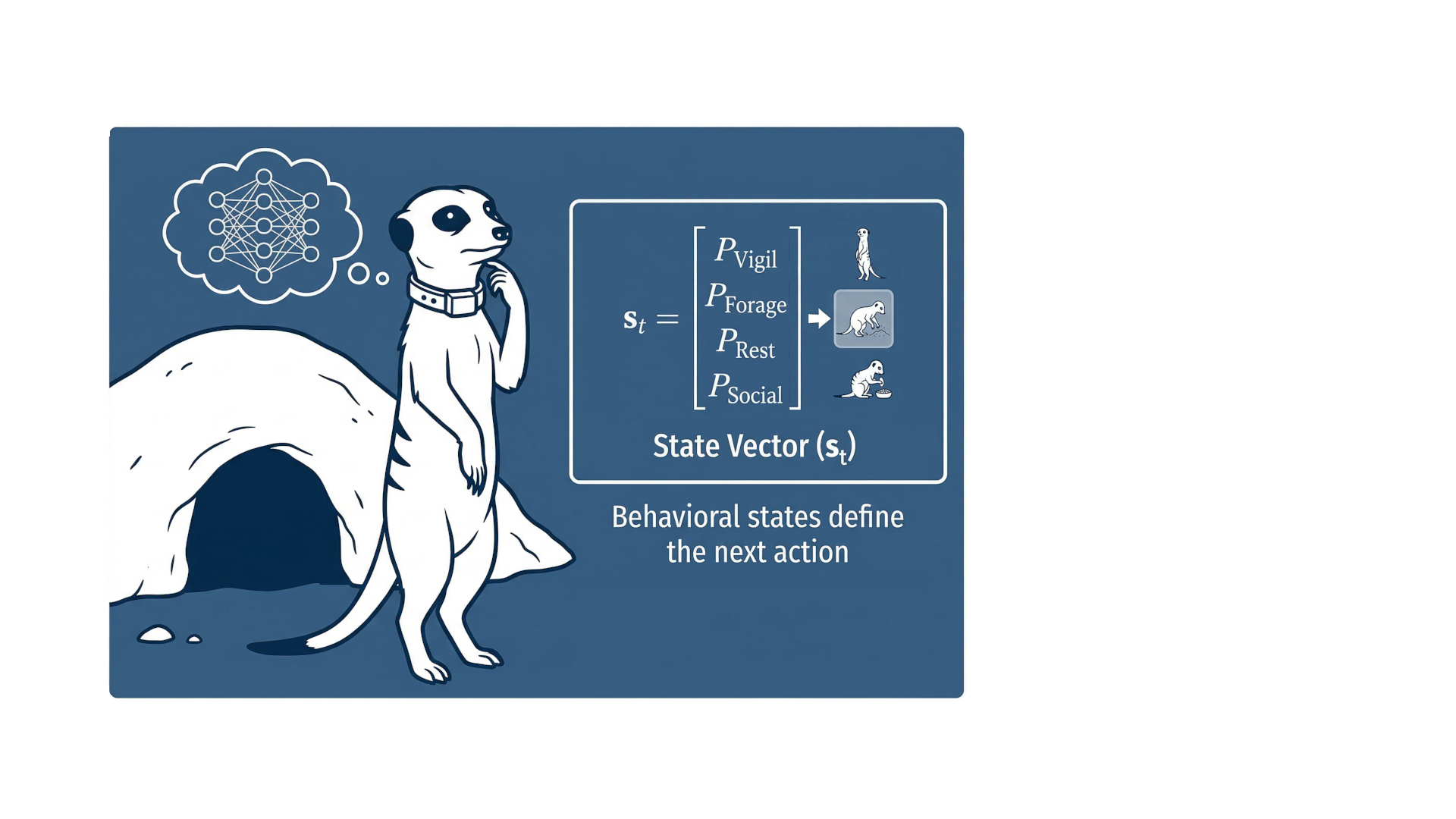
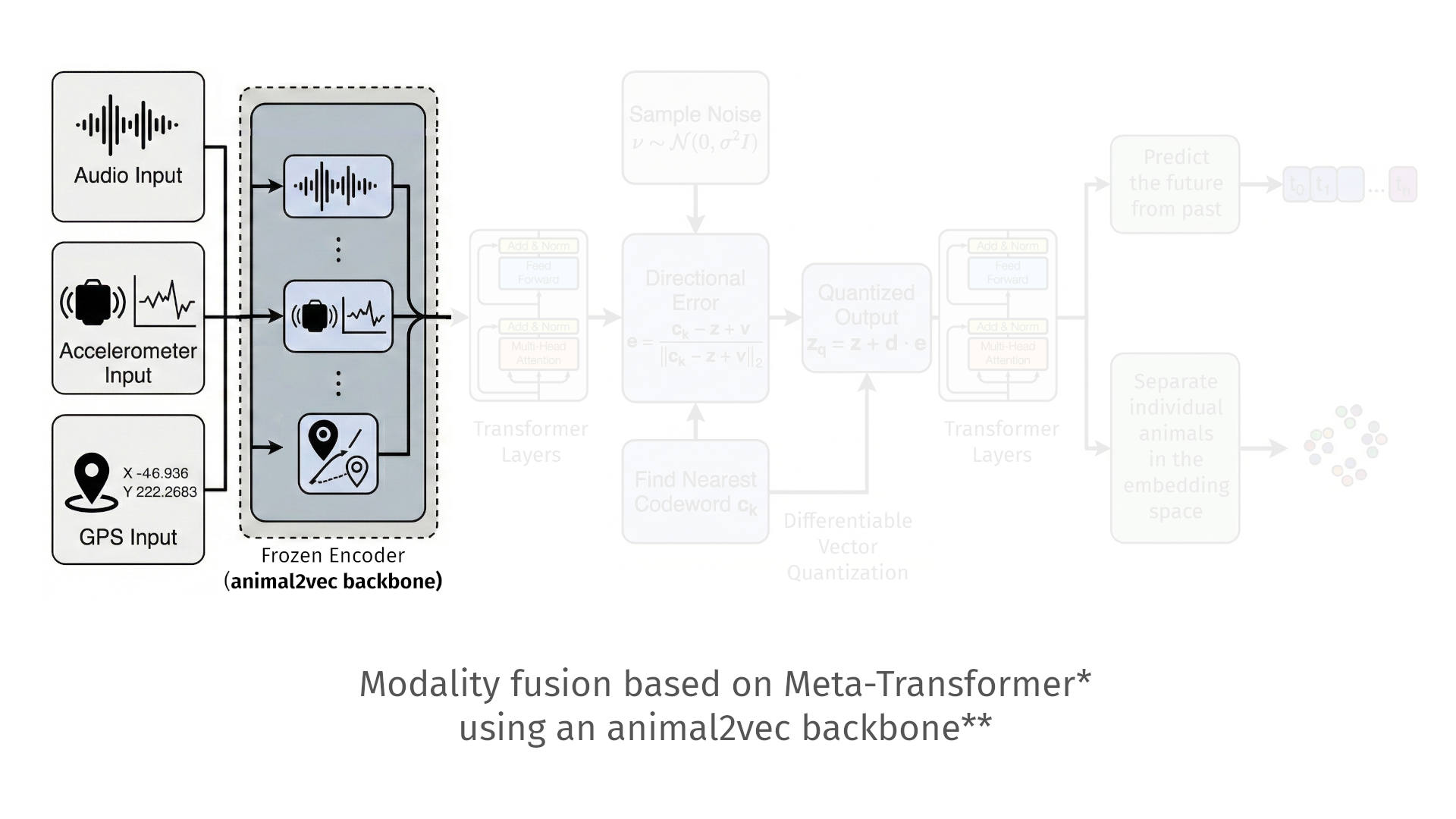
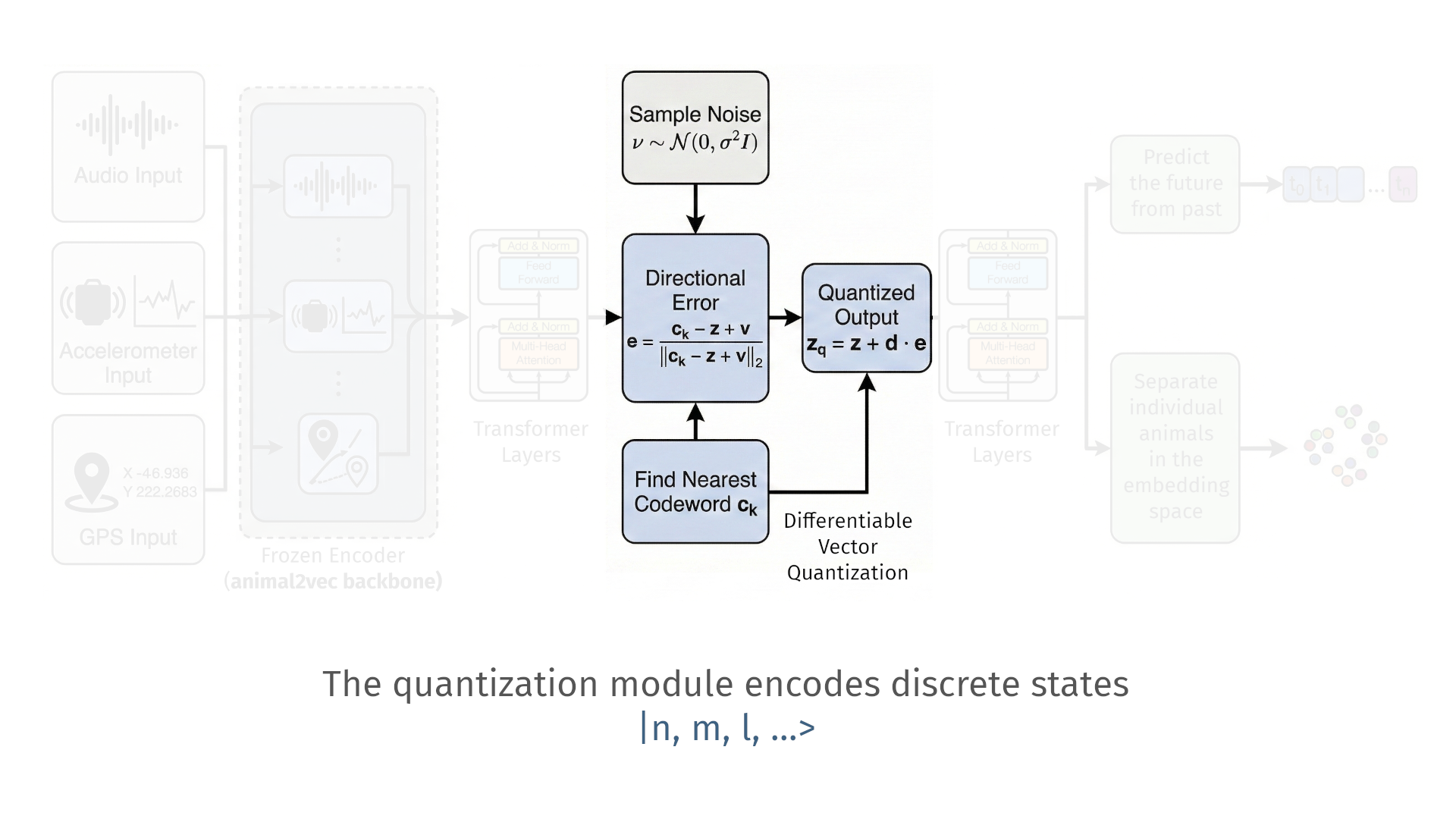
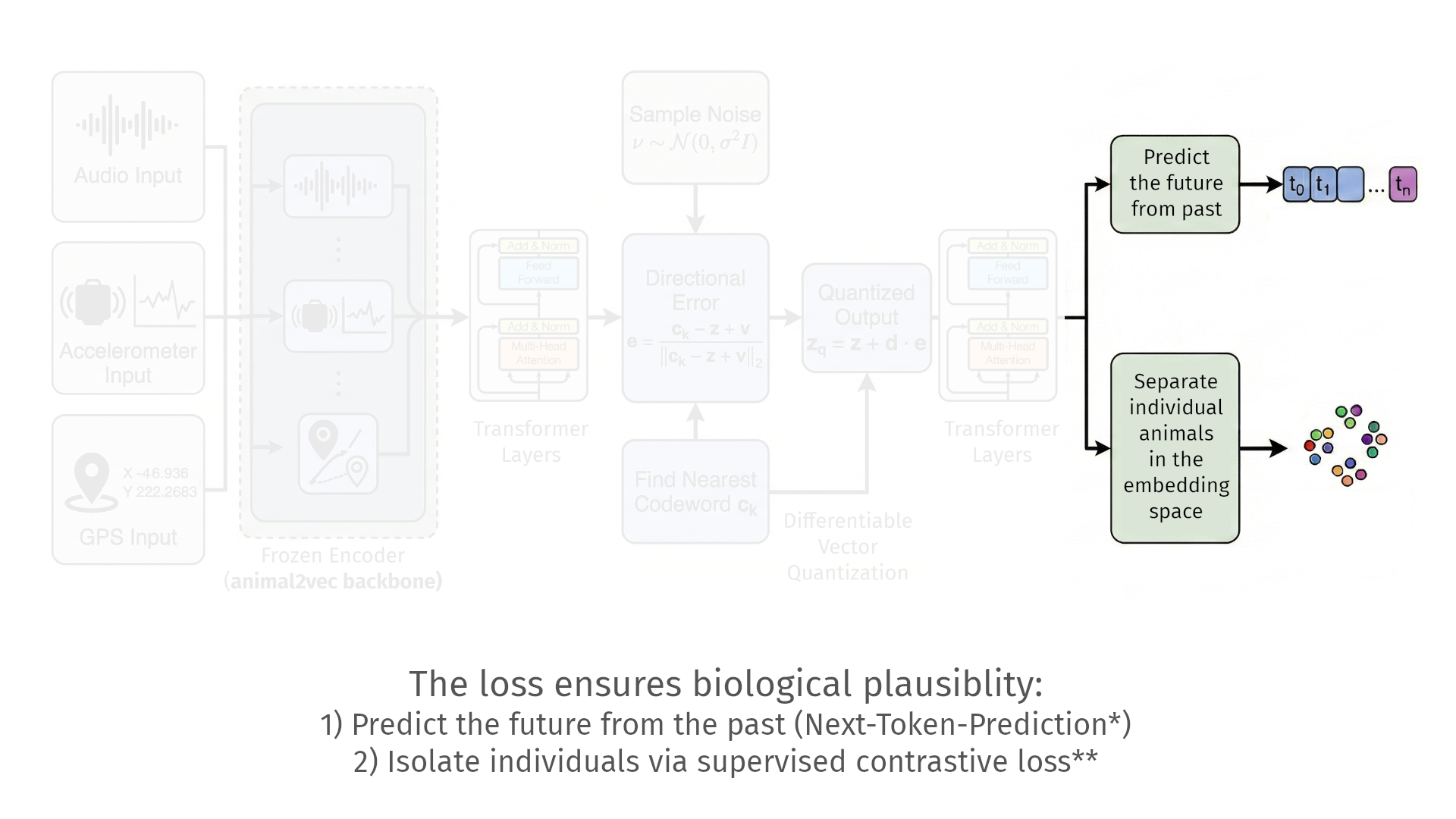
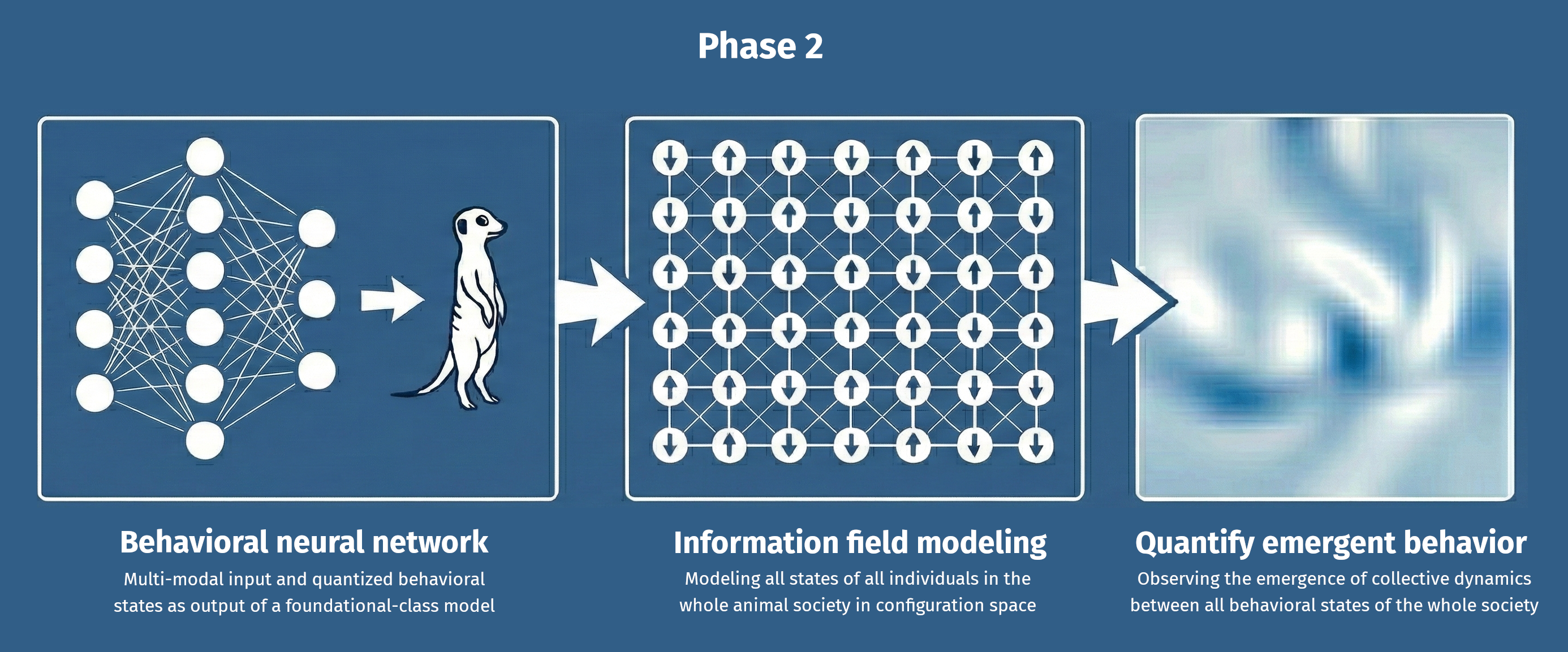
Phase 2:
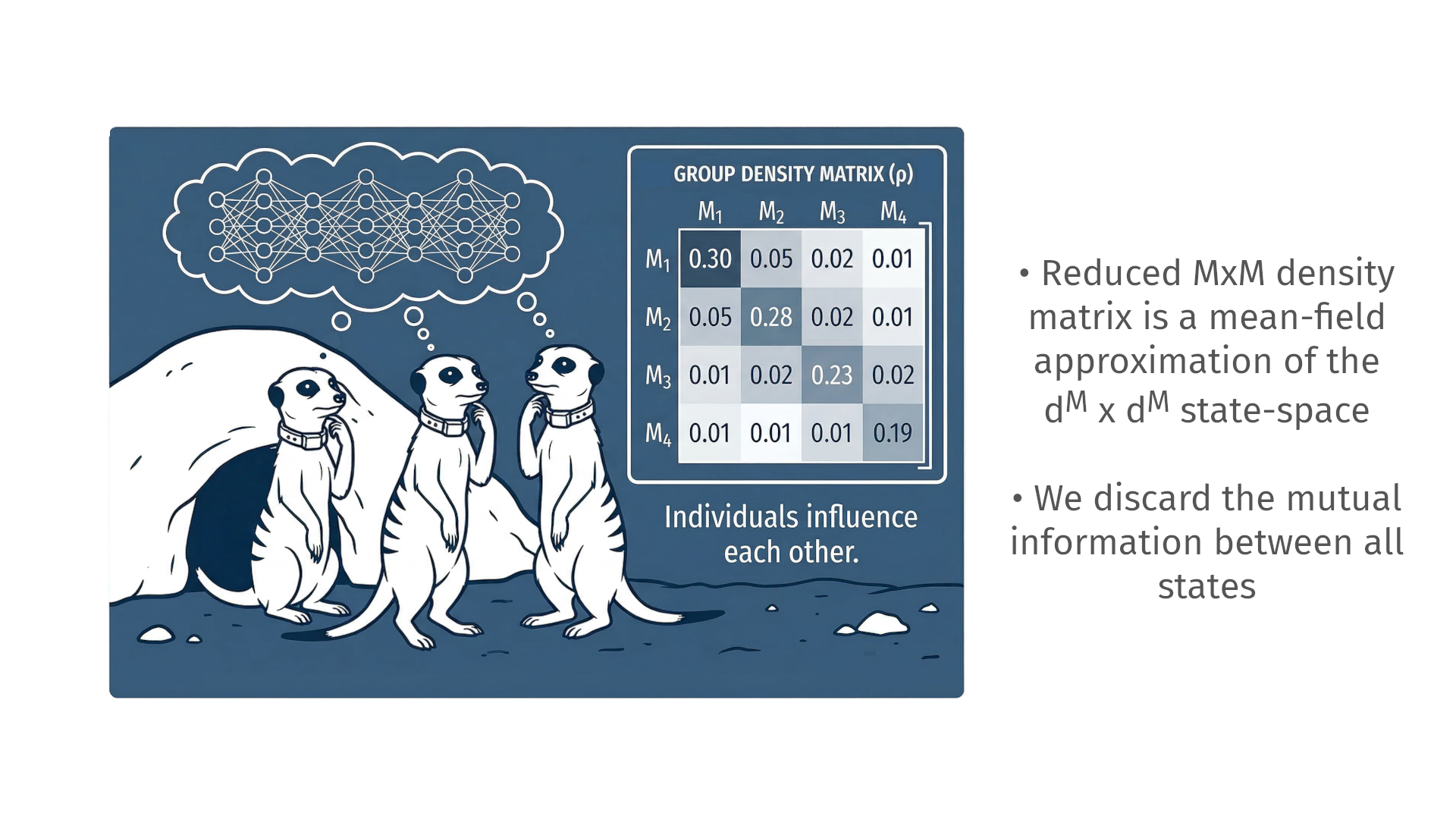
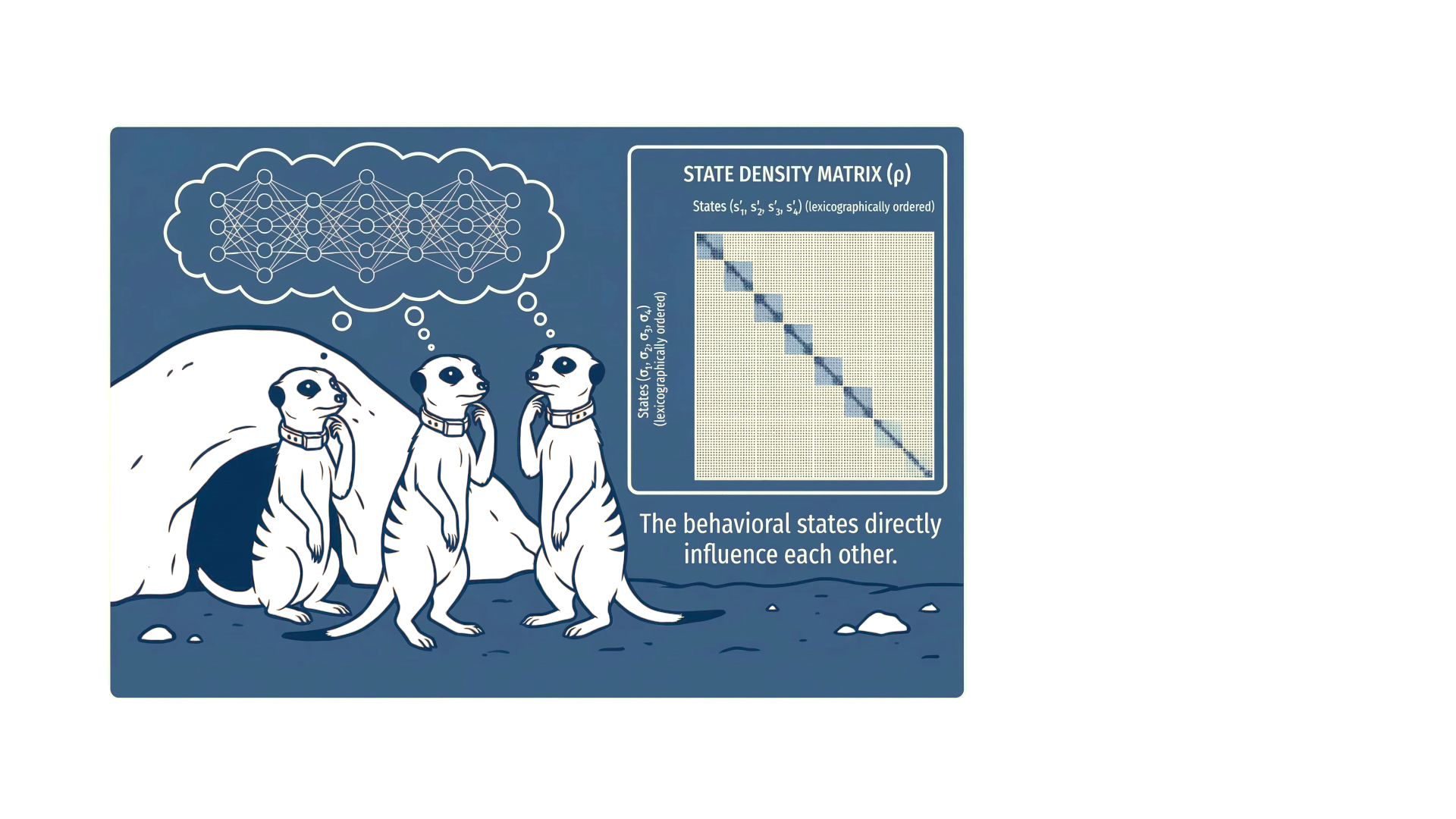
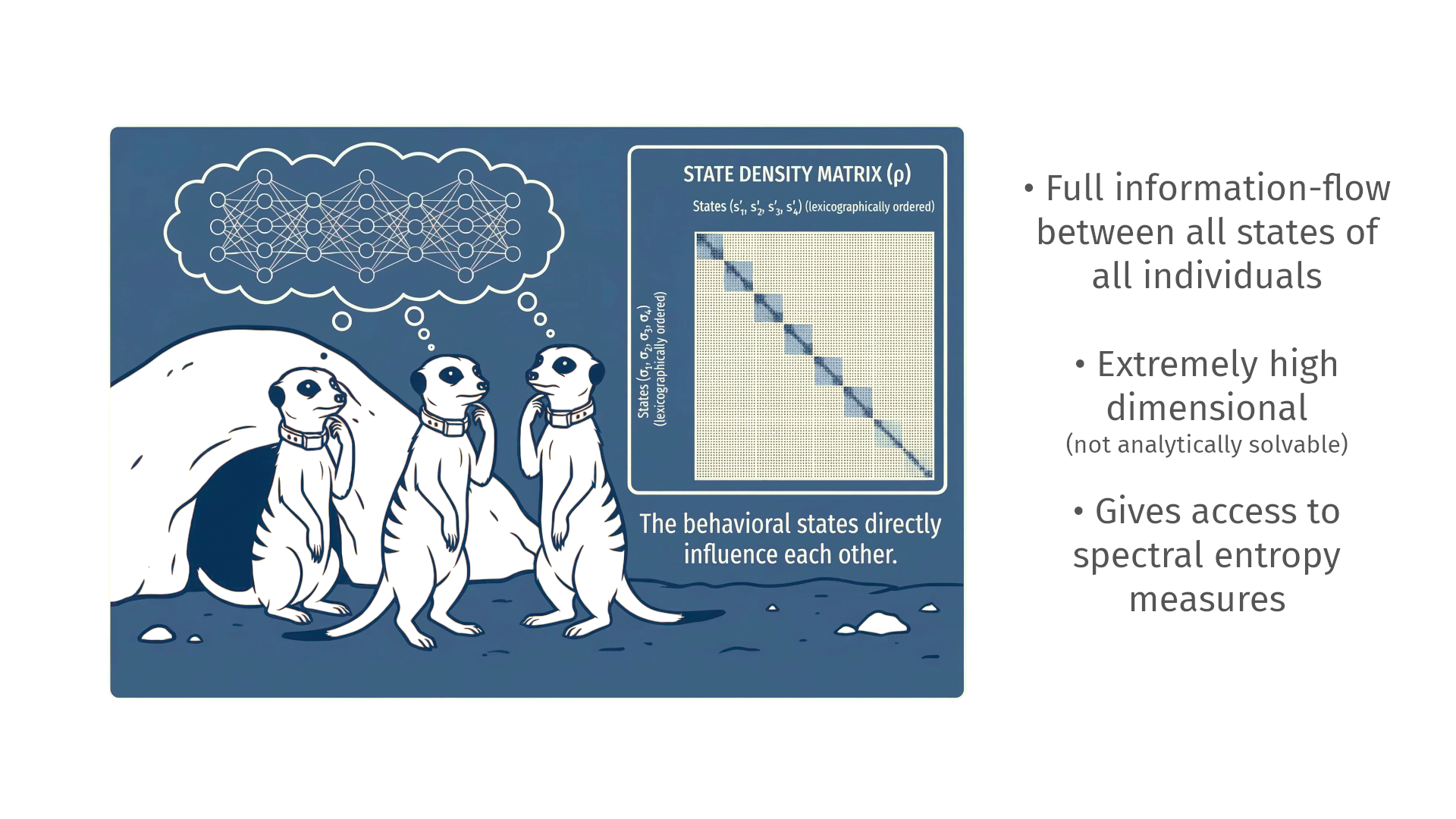
From the neural network to information field theory
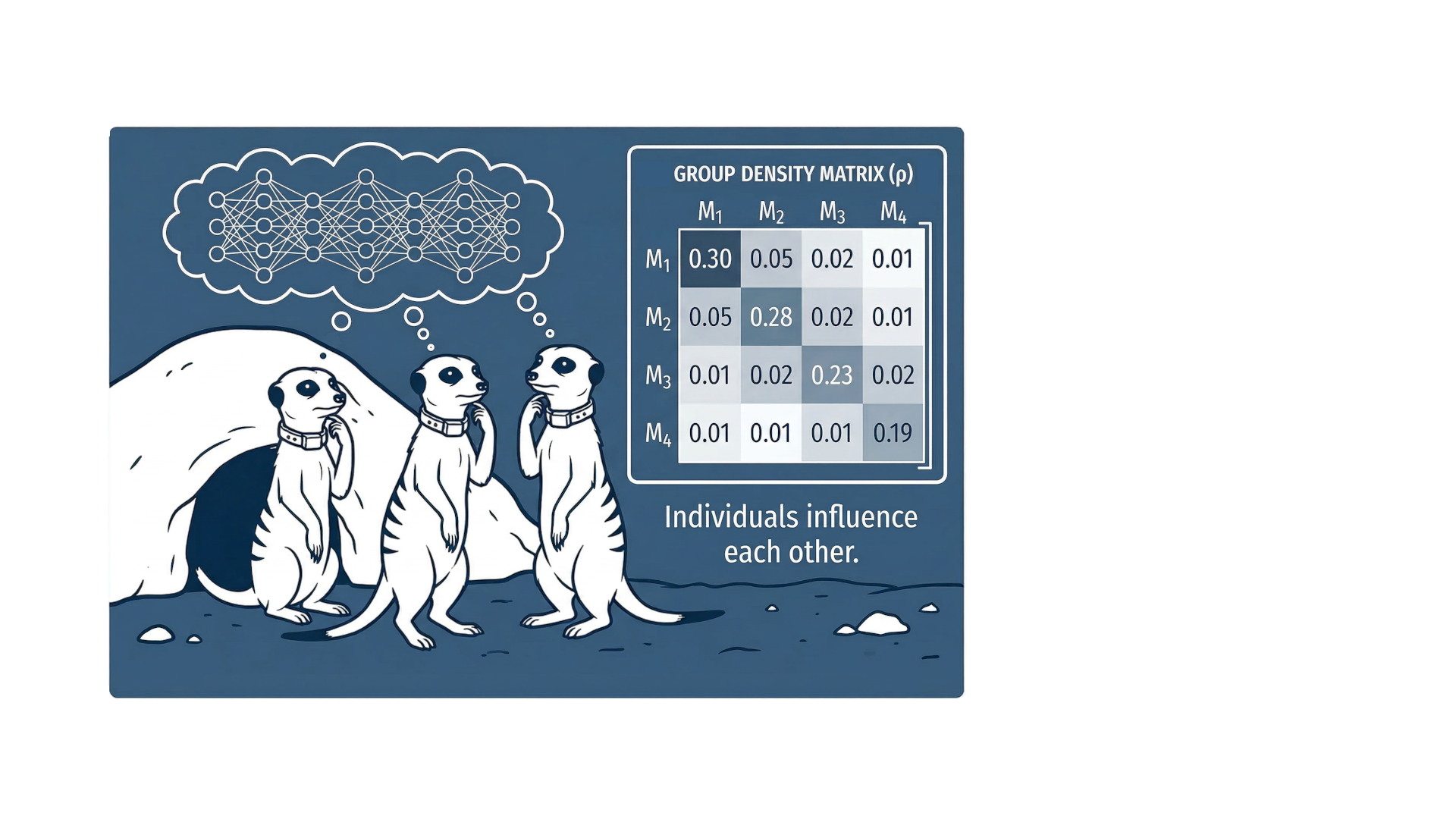
Phase 2:
From the neural network to information field theory
The approach and novelty of this project
- Learning behaviors directly from data by training a behavioral neural network (BNN), which assumes nothing
- This is a hypothesis-free abductivist approach to behavioral science
- Define biologically relevant situations that show phase transitions or tuning in and out of a state of criticality, such as foraging or predator evasion
- Infer the behavioral states for the situations from the BNN
- Learn a social Hamiltonian for each of these situations
- Pairwise and, later, higher order interactions via Graph Neural Networks
- Recreate the situation using the information-field theory approach
- How is each behavioral state from each individual affecting every other behavioral state from every other individual
- These are predictive models, with which we can also predict behaviors for new and/or rare situations (Hypothesis generation)
The approach and novelty of this project
- Once this is established, we can:
- Explore the collective behavior of other species / systems (Max Planck Institute of Animal Behavior (MPIAB) as collaborator)
- I will remain a guest scientist at MPIAB
- Derive world models with agents based on the learned behaviors of the neural network
- Backwards engineer analytical - biologically interpretable - models from the learned Hamiltonians
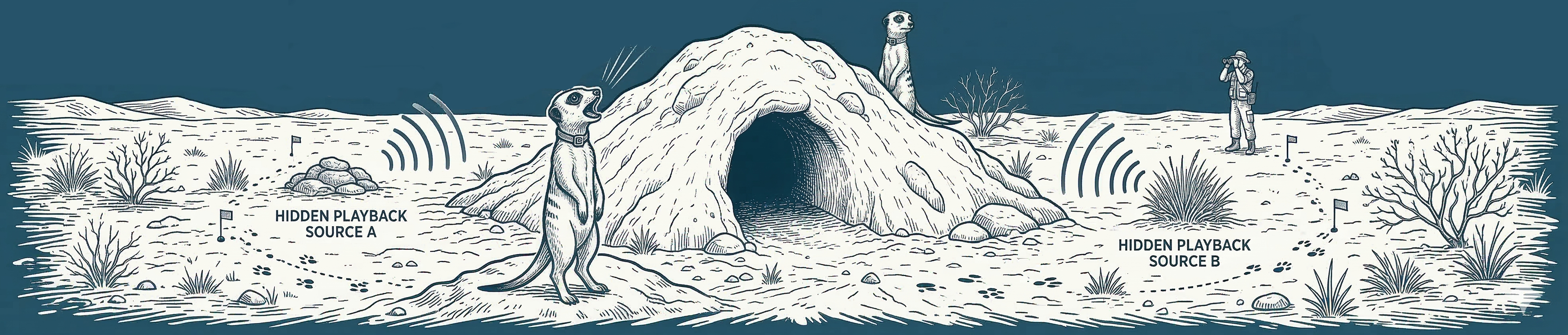
- Go back to the field and test hypotheses in playback experiments
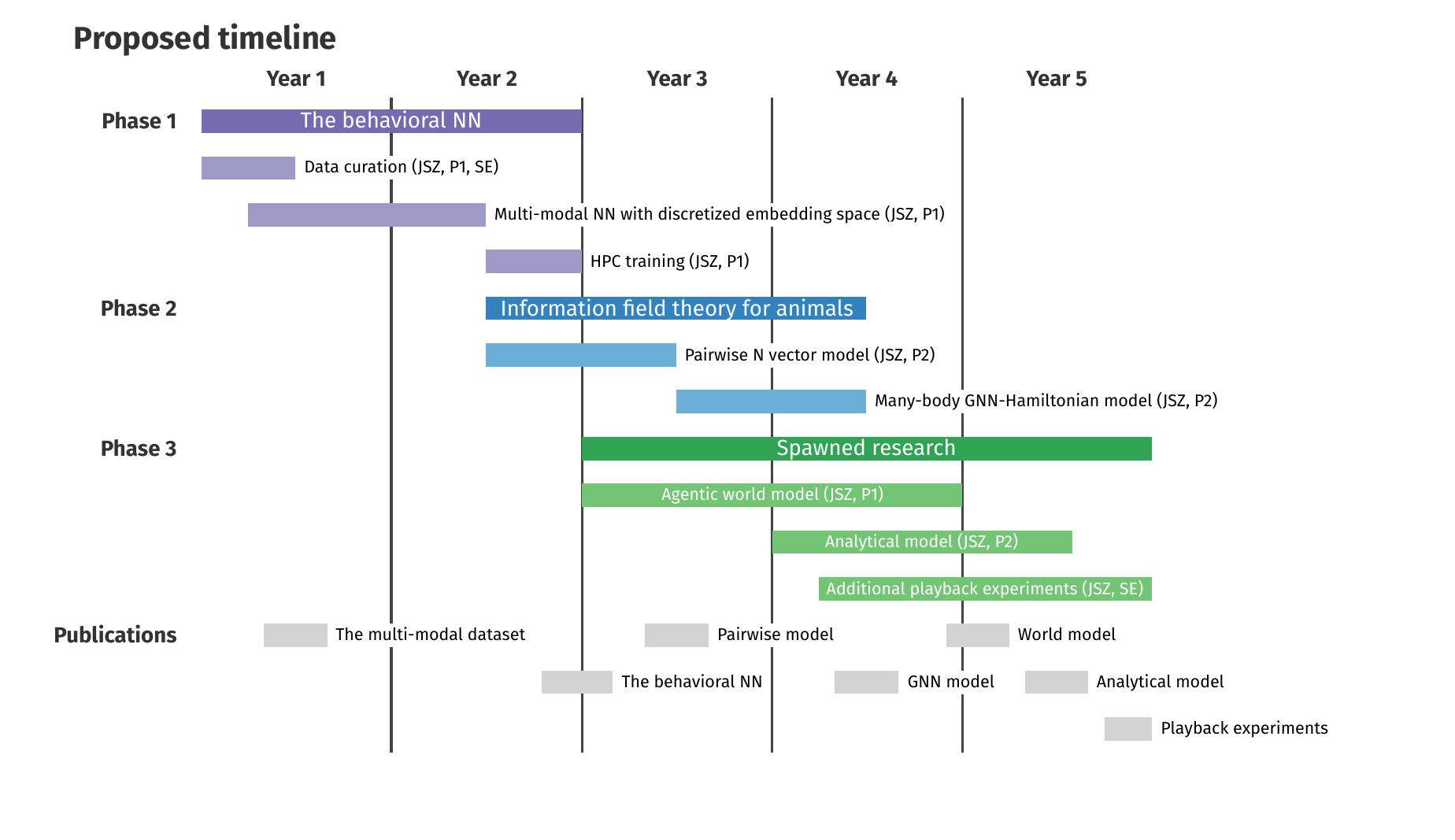
Timeline
Risk mitigation
- What if the BNN learns nothing
- We can kickstart phase two using:
- Classical ethological descriptors (e.g., "sleeping" or "foraging")
- Video as additional input modality for the BNN (this substantially decreases dataset temporal coverage)
- Synthetic data from established movement models
- Modify the collars worn by the meerkats (sampling frequencies, modalities, ...) and do an experimental campaign
- What if the modelling in the configuration space yields nothing
- We can fallback to node-based mean-field modelling
- Directly derive an analytical model from the behavioral states of the BNN
Summary
My research focuses on understanding the internal drivers of animal behavior directly from multimodal data. I model the dynamics of entire animal groups using an approach that renders these internal states visible.
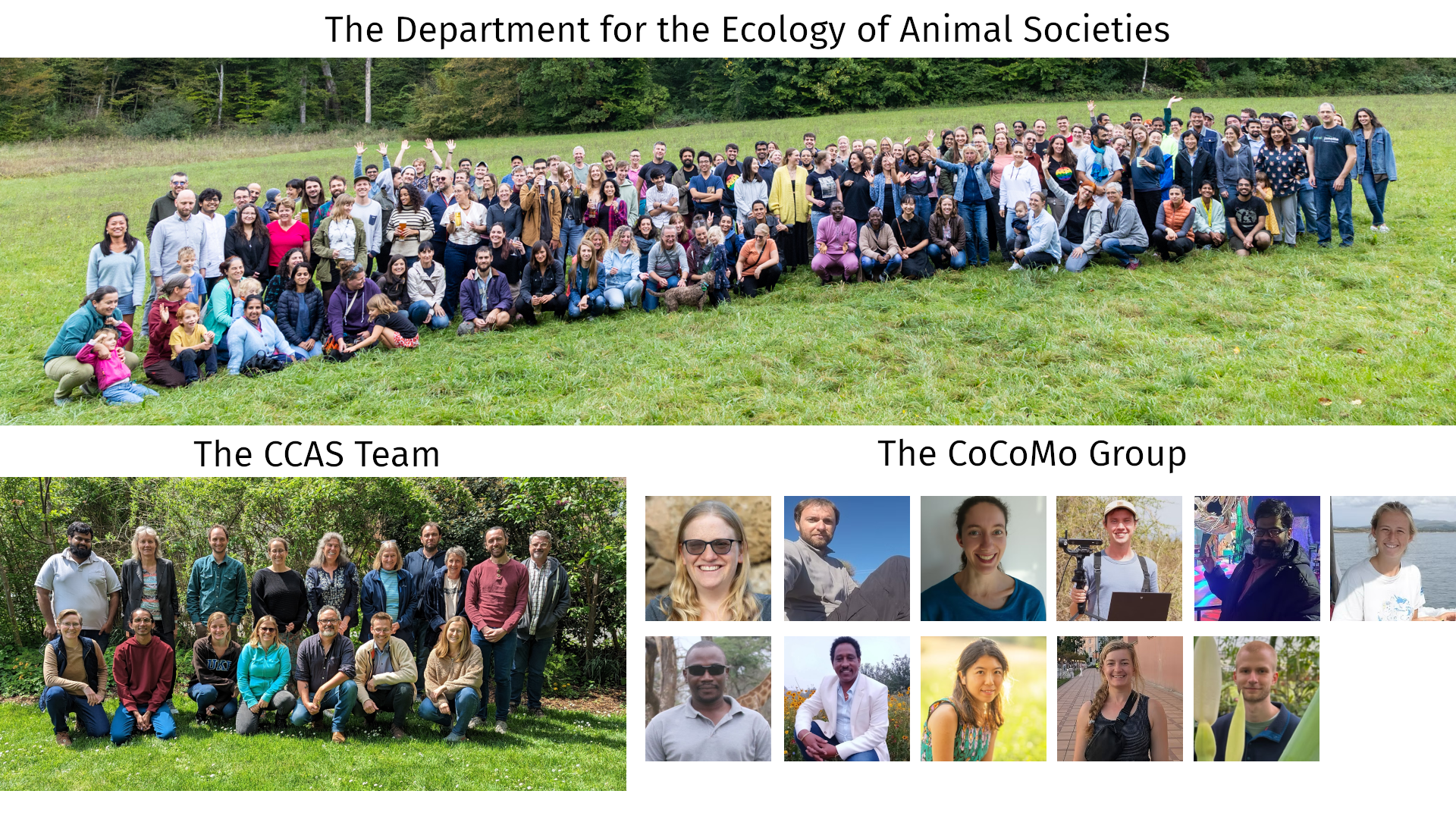
The team
Information field theory for collective behavior
Proposed project for an Emmy Noether research group at the Center for Critical Computational Studies
Julian C. Schäfer-Zimmermann
Max Planck Institute of Animal Behavior
Department for the Ecology of Animal Societies
Communication and Collective Movement (CoCoMo) Group